What kind of poker player are you?
Seven questions about how you play, not what you know. Cash games or tournaments, any stakes. At the end: the pattern your answers look most like, what it usually costs, and one thing to try next session.
You just lost a big pot. How do you play the next few hands?
The river, the last card. You honestly cannot decide: bet or check?
A player bluffed you an hour ago. Now they raise you again.
You have been playing for hours. How is your game different now?
You are in the small blind. Two players just called the big blind. Your hand is so-so, like K-7 or 9-6.
You are well ahead: a big stack, or a good day. What changes?
New table, players you have never seen. What do you notice first?
Reading your answers
Your answers look most like
 Free app
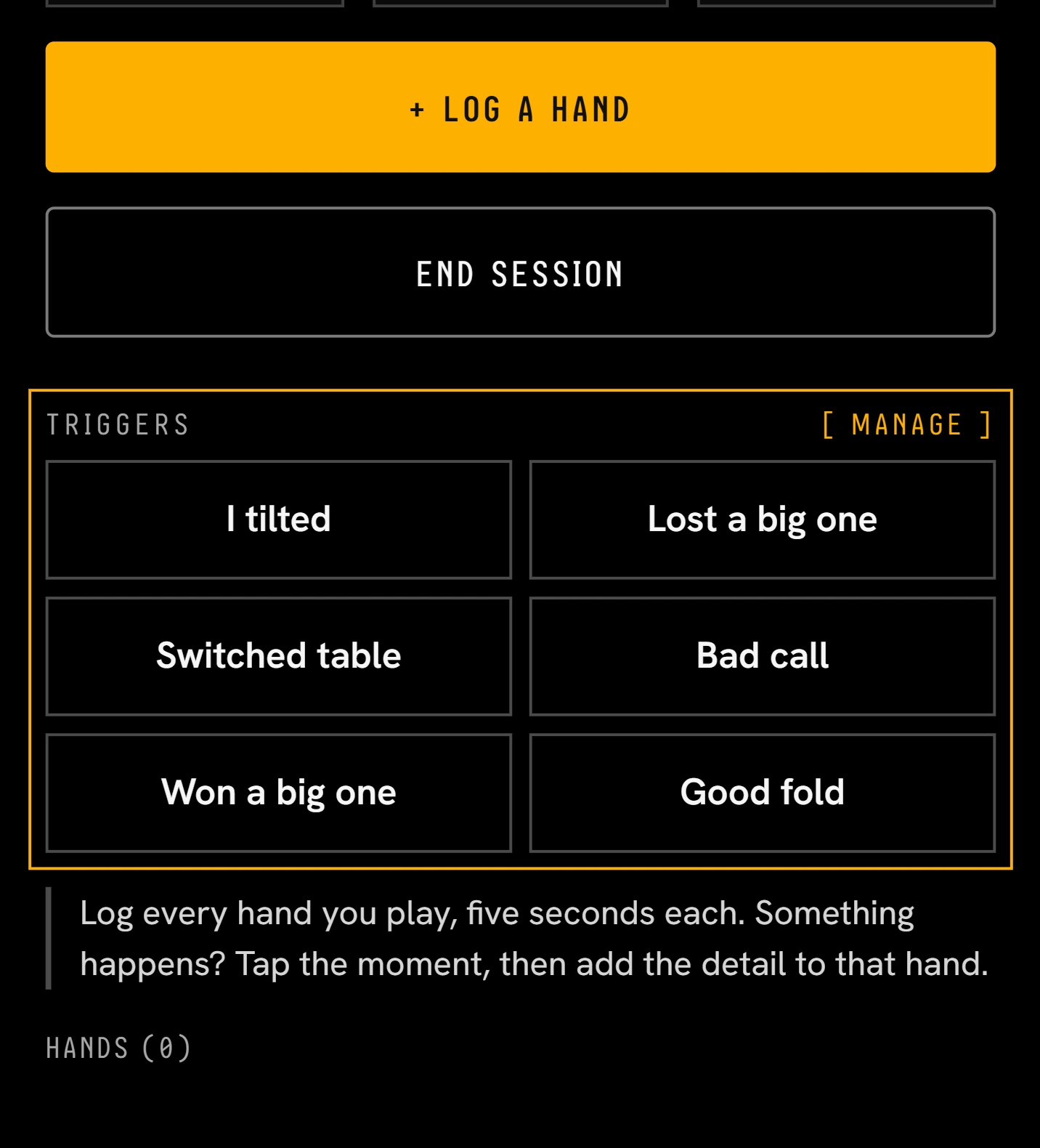
Log one night. See if your hands agree.
Log hands between hands. After the session, the app shows which seats and spots cost you.
Free to start, no card. Your seven answers come with you.
Continue with Google
or create a free account with email


 $19 e-book
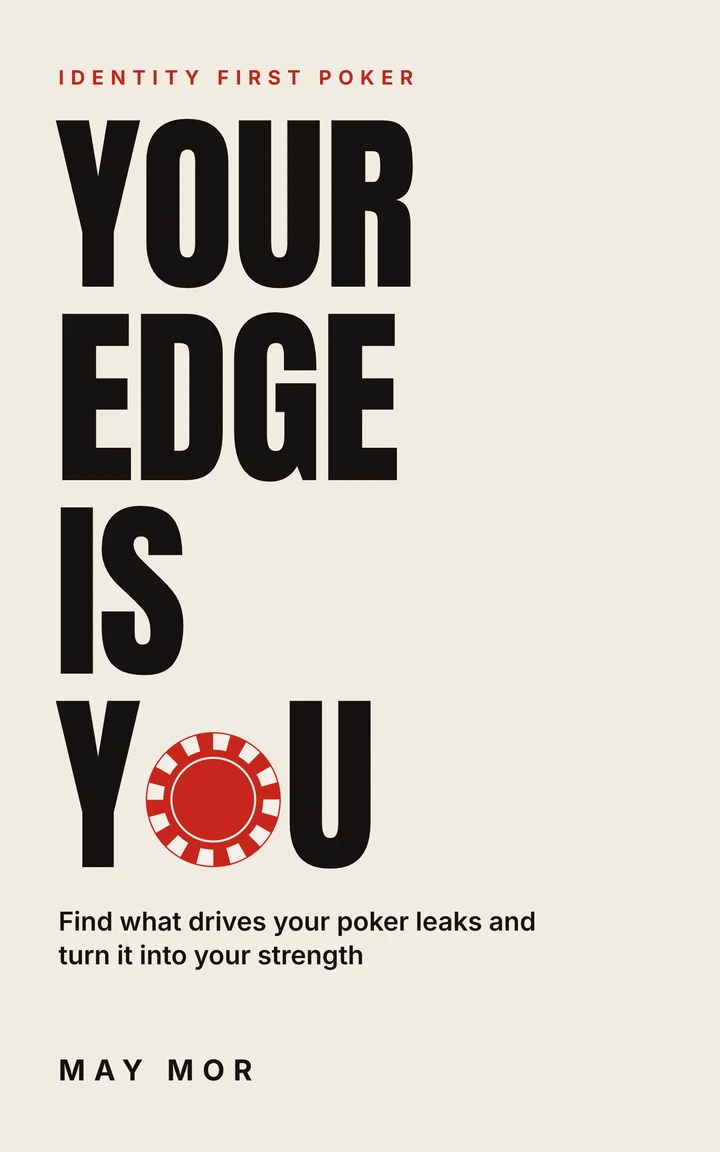
The book for the mistake you keep making
Find where it starts in your own hands. Leave with a plan.
See the book
Questions
Does this work for tournaments too?
Yes. Every question is about how you decide, not about the format, so it reads the same in a cash game or a tournament, live or online, at any stakes. You do not need to know any theory to answer it.
Is this a personality test?
No. It is a coaching lens, not a validated psychometric instrument. Seven answers can point at a pattern; they cannot diagnose anyone, and most players are a blend of two of these with one that takes over under pressure.
Do I need an account?
No. The quiz runs in your browser, asks for no email and saves nothing about you. It adds one to anonymous totals, such as how many people picked each answer. If you open an account from the result, your seven answers go with you so the app does not ask them again. Otherwise they are gone when you close the page.
What are the five patterns?
They are five ways of deciding under pressure, and the quiz tells you which one your answers look most like. Each has its own page: the Reactor, the Protector, the Hunter, the Architect and the Grinder. Worth reading after you have answered rather than before.
What is the difference between a pattern and a leak?
A pattern is how you tend to decide. A leak is what that tendency costs in money. The same habit is usually winning chips somewhere else on the same night, which is the reason the work is to aim it rather than to remove it.
What do I do with the result?
Try the one change for a session. Then check it against your own hands: a pattern read from seven answers is a guess, and a pattern read from two hundred logged hands is a finding.
What is the app behind this?
Identity-First Poker is an app for live poker players to log hands between hands and review them after the session. After each session it reads the record back to you: which seats and hands cost the most, what happens right after a big pot, and what already works. It does not teach GTO or ranges, and it is free for players at least through December 31st, 2026.
Start freePlay responsibly. Poker is gambling, and you can lose money. Play only with money you can afford to lose, and never to win back losses. For adults 18 and over, or the legal age where you live, and only where playing is legal. The book and the app are for people who already play: they do not encourage anyone to start, and nothing in them is financial advice or a promise of results. If gambling is hurting you or someone close to you, stop and get help: 1-800-522-4700 (US), 0808 8020 133 (UK), or Gamblers Anonymous. More on playing responsibly.
18 and over. An AI coach, not a person. This quiz is a coaching lens, not a psychological or medical assessment, and it is not financial advice. Play responsibly.