One of five poker player patterns
The Hunter
Seeing a spot that was not really there
You look for the weak player and the seat that plays into them, and you go after it. When there is money at that table, you are the one who takes it.
What it usually costs
Chips you put in on a read that turned out to be wrong.
What it is good for
You get paid by the players everyone else only complains about.
One thing to try next session
Before you put the chips in on a read, say what hand you think they have. If you cannot name one, it was a feeling.
 Free app
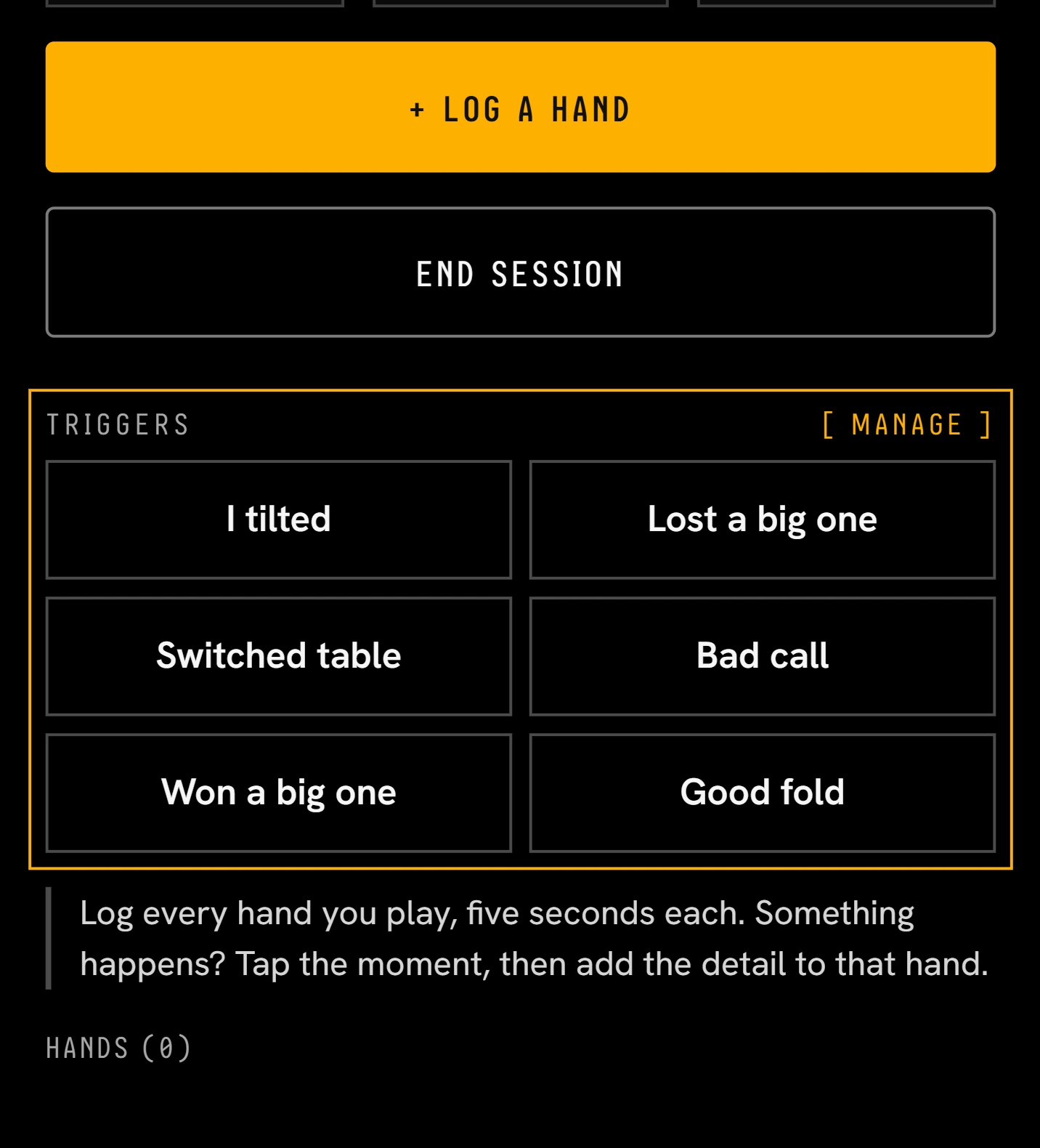
Log one night. See if your hands agree.
Log hands between hands. After the session, the app shows which seats and spots cost you.
Free to start, no card.
Continue with Google
or create a free account with email
 $19 e-book
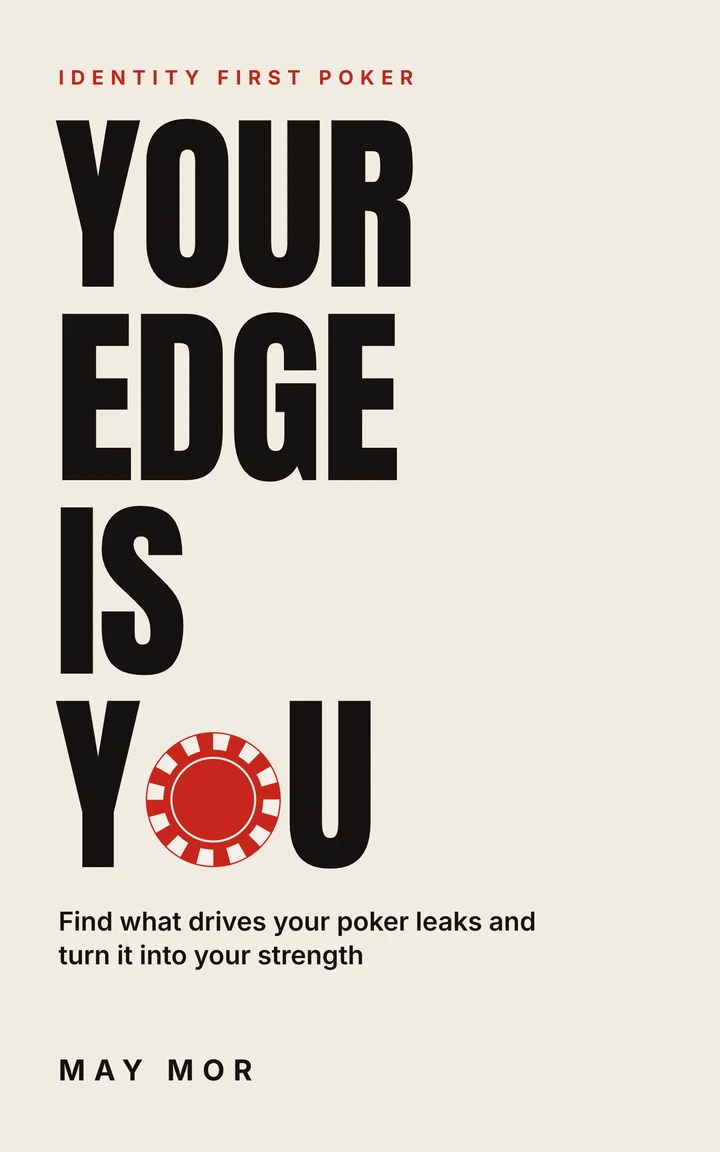
The book for the mistake you keep making
Find where it starts in your own hands. Leave with a plan.
See the book
How to know whether this is really you
Go through your biggest losing hands and mark the ones where you were playing a read. If that is most of them, the reads are the work.
The other four patterns
- The Reactor: still playing the last big pot.
- The Protector: folding the hand that was ahead.
- The Architect: sticking to the plan after the game changed.
- The Grinder: playing hours that were not worth playing.
Take the quiz if you have not yet: seven questions, about a minute, cash games or tournaments.
Play responsibly. Poker is gambling, and you can lose money. Play only with money you can afford to lose, and never to win back losses. For adults 18 and over, or the legal age where you live, and only where playing is legal. The book and the app are for people who already play: they do not encourage anyone to start, and nothing in them is financial advice or a promise of results. If gambling is hurting you or someone close to you, stop and get help: 1-800-522-4700 (US), 0808 8020 133 (UK), or Gamblers Anonymous. More on playing responsibly.
18 and over. An AI coach, not a person. This is a coaching lens, not a psychological or medical assessment, and it is not financial advice. Play responsibly.